Home Blogs How a CEO learned that change is never finished — from accidental opportunity to print-to-digital transformation to AI revolution
  • Built for Change
  • People of OLX

6 min. read

Transformation at OLX

How a CEO learned that change is never finished — from accidental opportunity to print-to-digital transformation to AI revolution

An interview with George Mienie about over 20 years of transformation at AutoTrader — from accidental CEO to print-to-digital pioneer to AI believer.

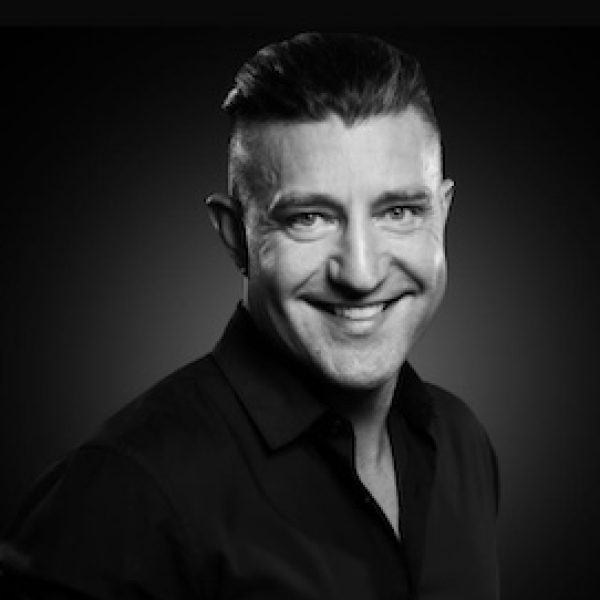
George Mienie
CEO, AutoTrader South Africa

George, you’ve led AutoTrader for nearly 20 years. But it started with a question you hadn’t planned to ask.

I joined in 2004 as CFO. I trained as a chartered accountant and held a role as Financial Director at a large FMCG and logistics organization before I joined AutoTrader. 

In 2006, the CEO of AutoTrader SA left, and the UK shareholder who owned us said, “You’re second in charge. Can you take care of the business until we find another CEO?”

In that moment — I hadn’t planned this — I said, “Sure. But can I have a shot at the job?”

I don’t think he was expecting that.

He gave me 6 months to prove myself. I focused on two things: profitability and culture. After 6 months, he gave me the job.

Looking back, that moment taught me something important. Opportunities don’t always arrive with a big sign attached to them. Sometimes they arrive disguised as extra responsibility.

1200×1200

Then what happened?

Literally a year later, they wanted to sell the company.

I’d been CEO for less than twelve months. I said I was on board. Then the 2008 financial crisis hit. Nobody was buying anything. They pulled it off the market.

At the time it felt like bad luck.

Looking back, it was one of the best things that could have happened to me. It was a gift.

How did that crisis change you?

It forced me to think differently.

I realized that at some point, they would sell this company. It wasn’t a question of if, it was a question of when. So I asked myself: what do I need to do to make AutoTrader an exceptional company?

For the next few years, I focused on building a company in the top 1% — not in size, but in culture, growth, execution, leadership, ambition and profitability.

I also knew I needed a different leadership team for the future.

We weren’t building a print business anymore. We were building an internet business.

Then came the biggest bet of your life.

Yes. In 2012, they wanted to sell AutoTrader SA again. But, this time, I was ready.

One of the options was a management buyout. So myself and 4 other senior leaders raised money to buy the company.

I sold everything I had. My house. My cars. I downgraded to a Golf. Every cent I’d ever saved went into buying this company.

If we didn’t make this work, we would all lose everything.

That’s enormous risk. What did your family say?

I was single at the time, so I didn’t have to ask anyone’s permission. But here’s what I learned: take the risk while you’re young.

When you’re young, you can afford to fail. And you can afford to fail bigger. Those failures will teach you, or you’ll be massively successful. Or both. But if you don’t take the risk, you’re never going to know.

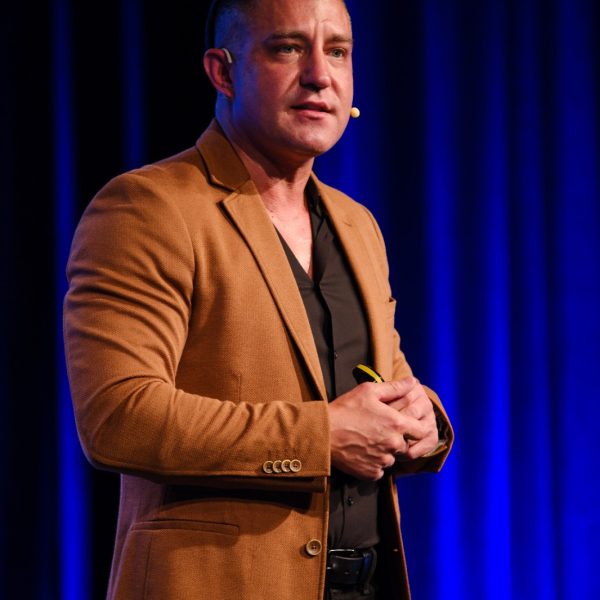
George Mienie

What was the transformation you had to navigate?

The first existential threat to AutoTrader was Print to digital. We were a magazine business trying to compete with 100% digital startups.

We were also not the first to market online. The first to market online classifieds business in South Africa has lost massively and is basically nowhere now.

I worked 7 days a week. Often first in the office and last to leave. So did the senior leadership team. We had everything to lose.

In 2017, we finally shut our flagship magazine – AutoTrader. That was the moment the gloves were off. We could fully focus on being a digital marketplace.

It took years, but we won. Today if you add all competitors together, AutoTrader is 3 times their cumulative size and significantly more profitable.

You sold to OLX in 2019. But you stayed on. Why?

Because I see it as my own, even though it’s been sold.

And because the work never seems to be done.

The culture we’ve built. The opportunity ahead. The constant change. I wouldn’t want to leave until the work’s done. But the work seems to never be done.

What keeps me here isn’t the product or the platform. It’s the people. Watching individuals grow into leaders, watching teams achieve more than they thought possible, and watching a business continue to reinvent itself year after year.

I’ve always enjoyed building more than owning. The moment you think you’ve arrived is usually the moment decline begins. There is always another problem to solve, another team to develop, another opportunity to pursue.

I’ve always maintained that a business’s sole sustainable competitive advantage is its people and culture. Everything else can and should be copied.

When OLX verticalized OLX’s strategy, it was like a sigh of relief. Suddenly we were part of something bigger with a common vision.

What’s the next transformation?

We’ve already lived through several existential threats. From print to online classifieds. From online classifieds to big-data. From big-data to AI & data. And now, from AI & data to agentic AI.

And AI might be harder than print to online classifieds.

AI is both an opportunity and an existential threat. It could disintermediate us. But if we play it right, focusing on brand, trust, and the data AI can’t see (our moat), we’ll come out even stronger.

It’s a strange world of “coopetition.” right now. AI is competition, but we have work with it to create value, just like we had to work with Google in the first transfomation. That’s the nature of an existential threat: you don’t beat it by ignoring it, you adapt alongside it.

You’ve navigated multiple transformations — print to digital, competition, now AI. What would you tell someone anxious about change?

There are no guarantees. Ever.

The only thing that exists is your ability to make yourself indispensable.

How?

First, embrace change. The moment you resist, you’re no longer indispensable.

Second, become an augmented human. Use AI tools. If everyone around you is using them and you’re not, you’re becoming the dumbest person in the room.

Third, put in disproportionate effort. Everybody’s working hard. If you work harder, you’ve got a competitive advantage.

Fourth, remember that every major transformation feels like an existential threat while you’re living through it. Print was. Digital was. AI is. The people and businesses that survive and thrive aren’t necessarily the smartest or the strongest. They’re the ones that adapt the fastest.

93f9d895-e988-41fb-b3a8-356737e869d0

You’ve built one of the strongest cultures in the industry. How did you do that during constant transformation?

When I became CEO, the culture was toxic. Political infighting everywhere.

I focused on one thing: transparency.

Here’s an example. Someone would come complain about a colleague. I’d say, “Have you spoken to them about this?”

“No, because…”

I’d say, “Don’t worry. I’m calling that person right now. All three of us are going to discuss this together.”

The best disinfectant of politics is sunlight.

Culture becomes even more important during periods of transformation. Strategies change. Products change. Technologies change. A business’s sole sustainable competitive advantage is its people and culture. Everything else can and should be copied.

You can’t change culture overnight. It takes years. But if you keep shining light on everything, the toxicity disappears.

Looking back, what’s your biggest mistake?

Not moving non-culture fit leaders out of the business soon enough.

I tried to work with them. But they worked against me. It took me 2 years to realize it.

I was 2 years too late.

I found that the business doesn’t rise to the highest performer, it falls to the lowest common denominator.

Leadership is often less about hiring the right people than having the courage to remove the wrong ones. High performers who aren’t culture fits rarely become culture fits. They usually become increasingly destructive as their influence grows. Get them out, fast.

Every time I compromised on culture, I regretted it. Every time I acted decisively, the business got stronger. Culture isn’t what you say. It’s what you’re prepared to tolerate.

The best time to do something is yesterday. The second-best time is today.

What’s your biggest learning from 20 years of transformation?

That opportunities walk past you every day, and you don’t see them.

When I asked for the CEO job, I hadn’t planned it.

When we bought the company, we risked everything.

But if you see the opportunity, take the risk, and focus on culture and building the right team — extraordinary things can happen.

The challenge is that opportunities rarely announce themselves as opportunities. They usually arrive disguised as change, uncertainty, disruption, or hard work.

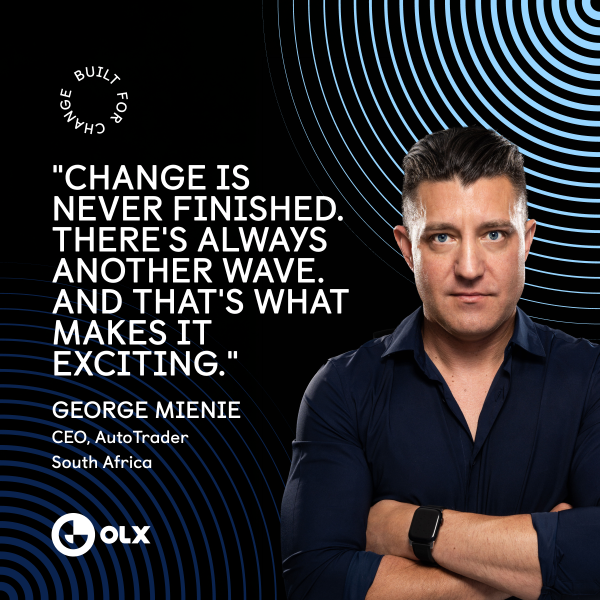
Change is never finished. There’s always another wave.

And that’s what makes it exciting.


George’s story is part of our “Built for Change” series, celebrating colleagues who’ve chosen growth over comfort. If you’re someone who thrives on transformation rather than stability, explore our open positions. Your first chapter at OLX could start here.

Think you’re built for change? Join us.

Explore open roles at OLX